・ 連絡: Please type this address into your email. このアドレスをメールに入力してください: 
Click any image below to see it full-screen, with ink, paper, size, tirage, and price info. Tirage is how many impressions of the limited edition have been made so far. Wherever shown, the depth, texture, and variety of tone in etchings inspire journeys of imagination. This site shows artwork without ads, donation, or subscription demands. The prints are available for purchase, at prices found on all full-screen pages.
下の画像をクリックすると、インク、用紙、サイズ、tirage、値段情報が表示されたフルスクリーンで表示されます。ティラージュは限定版のインプレッション数です。本物のエッチングの深み、質感、色調の多様性は、日常の中で想像力の旅を提供します。
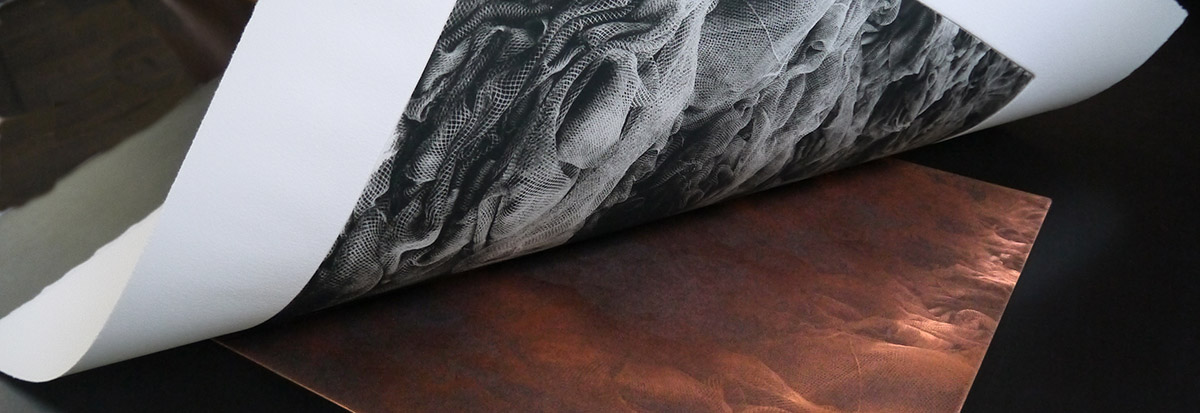
Photogravure etchings are a visual experience like none other. Printed with richly pigmented inks on hand-made European etching papers or Japanese washi, their unique depth, texture, and tonality project a three-dimensional quality, creating a viewing experience unique to intaglio. Please scroll down to learn About the artist, how these prints are made, and how to purchase the prints. Certain prints available exclusively from Conrad Graeber in the United States are marked as such.
グラビアエッチングは、他に類を見ない視覚体験です。手漉きのヨーロッパのエッチング紙や日本の和紙に顔料の豊富なインクで印刷された、その独特の深み、質感、濃淡は、並外れた立体的な品質を映し出します。下にスクロールして、アーティストについて、これらのプリントの作成方法、プリントの購入方法を確認してください。
To order, please click the rice image here; ご注文はこちらのお米の画像をクリックしてください:

On the page that follows, please enter the price of the print you are ordering -- it will arrive at the address you write in the message space on that page. SSL encrypts all payment information for security and privacy.
次のページで、注文するプリントの価格を入力してください。そのページのメッセージ欄に記入した住所に届きます。SSL は、セキュリティとプライバシーのためにすべての支払い情報を暗号化します。
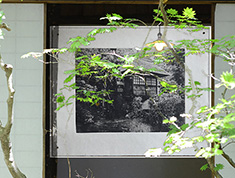
305. Time and Time Again. 33 x 25 cm (13 x 10") photogravure etching, Carbon Black etching ink on 47 x 38 cm (19 x 15") Mitsumata washi (2014)
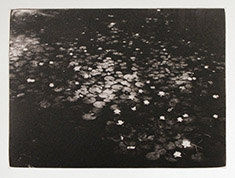
258. Vanished Stars. 18 x 13 cm (7 x 5") photogravure etching, Carbon black etching ink on 30 x 25 cm (12 x 10") Fabriano Tiepolo paper (2009)
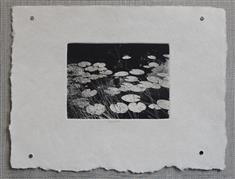
265. Bygones, 16 x 12 cm (6 x 5") photogravure etching, Carbon black etching ink on 30 x 25 cm (12 x 10") washi or Fabriano Tiepolo paper (2009)
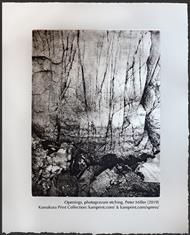
333. Openings, 26 x 35 cm (10 x 14"), photogravure etching, Izote French Black etching ink on Fabriano Tiepolo paper (2019), Pathways Series, Vityaz Bay, Russia
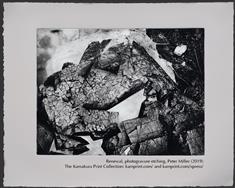
332. Renewal. 35 x 27 cm (14 x 11") photogravure etching, Izote French Black etching ink on Fabriano Tiepolo paper and Mitsumata washi (2019), Pathways Series, Vityaz Bay, Russia
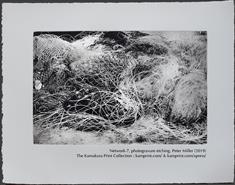
334. Network-7. 35 x 24 cm (14 x 10" ) photogravure etching, Izote French Black etching ink on Fabriano Tiepolo paper (2019)
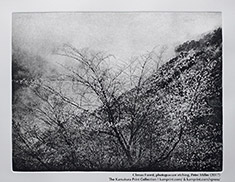
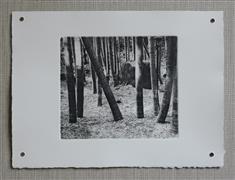
330. Climax Forest. 35 x 26 cm (14 x 10") photogravure etching, Izote French Black etching ink on Fabriano Tiepolo paper and Mitsumata washi (2017)
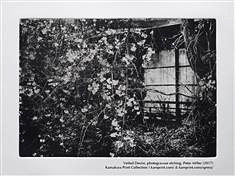
329. Veiled Desire. 28 x 19 cm (11 x 8") photogravure etching, Izote French Black etching ink on Fabriano Tiepolo paper and Morisawa washi (2017)
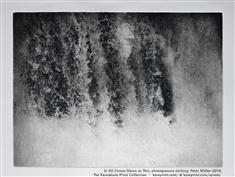
315. It All Comes Down to This. 43 x 31 cm (17 x 12"), photogravure etching, Warm Black etching ink on Fabriano Tiepolo (2014); Blackwater Falls, West Virginia, U.S.A.
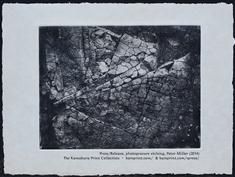
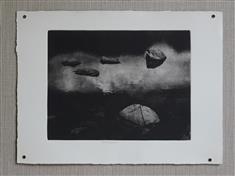
311. Press/Release. 27 x 20 cm (11 x 8"), photogravure etching, Carbon Black etching ink on Rives BFK (2014); weathered rock at Vityaz Bay, Primorsky, Russia
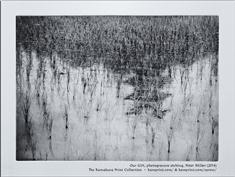
310. Our Gift, 41 x 30 cm (17 x 12") photogravure etching, Warm black etching ink on Fabriano Tiepolo (2014)
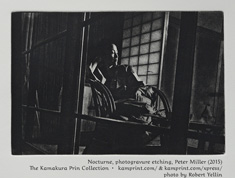
320. Nocturne, 20 x 14 cm (8 x 6") photogravure etching, Carbon black etching ink on Fabriano Tiepolo paper (2015).
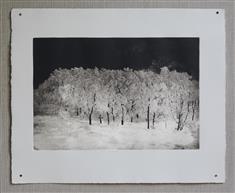
325. Peak Experience. 44 x 30 cm (18 x 12") photogravure etching, Izote Mars Black etching ink on Rives BFK paper (2016)
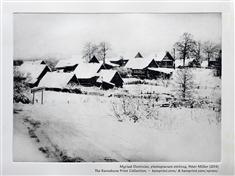
319. Myriad Destinies, 43 x 31 cm (17 x 12"), photogravure etching, Warm black etching ink on Fabriano Tiepolo (2014)
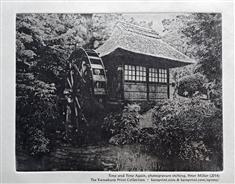
305. Time and Time Again, 33 x 25 cm (13 x 10"), photogravure etching, Carbon Black etching ink on Mitsumata washi (2014) Furusato Series, Hakone
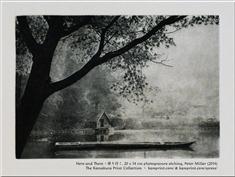
300. Here and There ・ 移り行く, 20 x 14 cm (8 x 6"), photogravure etching, Carbon Black etching ink on Mitsumata washi (2014) Seascapes Series, Daikakuji, Kyoto
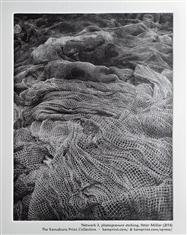
308. Network-3, 26 x 34 cm (10 x 14"), photogravure etching, Carbon Black etching ink on Mitsumata washi (2014) Seascapes Series, Ine, Japan
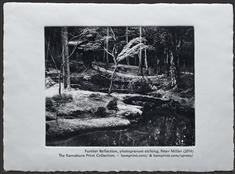
313. Further Reflection ・ 西芳寺。 26 x 21 cm (10 x 8") photogravure etching, Black etching ink on Fabriano paper (2014)
Etched in memory. Printed with richly pigmented inks on hand-made European etching papers or Japanese washi, the unique depth, texture, and tonality of photogravure etchings project an extraordinary three-dimensional quality. For any question regarding how to make this visual experience part of your everyday life, please ask.
記憶に刻まれています。 ヨーロッパの手漉き紙や日本の和紙に顔料の豊富なインクで印刷されたグラビア エッチングの独特の深み、質感、濃淡は、並外れた立体感を放ちます。この視覚体験を日常生活の一部にする方法について質問がある場合は、お問い合わせください。
Series: Temples・寺 Dreamscapes・夢 Seascapes・海 Furusato・ふるさと Pathways・道 Mongolia・モンゴル Acts & Scenes・町 Unseen・見残す
Every full-screen page includes this link for ordering the print you select and writing in the price and your postal mailing address; すべての全画面ページには、選択したプリントを注文し、価格と郵送先住所を記入するための次のリンクが含まれています。
To have the title and price of the selected print appear automatically, please use the order form linked from this icon on every full-screen page. 選択したプリントのタイトルと価格が自動的に表示されるようにするには、全画面ページのこのアイコンからリンクされている注文フォームを使用してください。

Your original photogravure etching will arrive at that address by Yu-Pack in Japan or by EMS elsewhere. 注文したプリントは、日本のゆうパックまたはEMSでその住所に届きます。
For more detail about the order procedure, plus a translation utility, please see here. 翻訳ボックス、どんな言語でも出来ます。
The Japanese inquiry form or the Japanese order form may be sent in any language. Prints are delivered world-wide outside Japan by EMS, with shipments tracked through Japan Post.
日本国内の宛て先だったら、着払ことが出来ます。 (Payment for prints delivered in Japan may be made by C.O.D.)
The Kamakura Print Collection is exclusively devoted to placing prints with clients. We do not accept ads, solicit subscriptions or donations, and do not conduct workshops. To order a print, please click the link found on every full-screen page. To see original prints, visits to The Kamakura Print Collection atelier may be arranged by appointment. Questions about any print of interest are answered quickly.
鎌倉版画コレクションは、広告を受け付けておらず、購読や寄付を求めておらず、ワークショップも行っていません。クライアントとアートワークを配置することが私たちの唯一のビジネスです。プリントを注文するには、全画面表示の各ページにあるリンクをクリックしてください。オリジナル版画を見るために、鎌倉版画コレクション アトリエへの訪問は、予約制で手配される場合があります。関心のあるプリントに関する質問にはが迅速に回答します。
In Inklings: Photogravure etching is part of the 600-year intaglio tradition. From developments in the previously unrelated fields of optics, light-sensitive materials, and etching, a new medium arose to express the aspirations of its time and our own.
Introductions to my exhibits: How the locale, the gallery or museum setting, the season, and the special interests of each venue affect the selection of prints shown. 私の展示の紹介: 場所、ギャラリーまたは美術館の設定、季節、および各会場の特別な関心が、表示される版画の選択にどのように影響するか.
Interview with Rfotofolio, also here.
Framing tips How to select frames, and other ways of displaying original prints.
Explore prints by mood at xpress: Dynamic, Reflective, Mysterious, Sensual, Spontaneous, Expansive, Elegiac, Intimate, or Luminous. Or by texture: Rough, soft, flowing, granular, linear, rhythmic. At xpress you can also search by ink, paper, image size, place, and Series. See all the prints on Fabriano paper, or all the prints from Norway, for example.
Views of The Kamakura Print Collection has occasional essays on art as a way of navigating the mysteries of life. 生命の神秘をナビゲートする方法として、アートに関するエッセイを時折書いています。
Videos: Accidental Discoveries and Unexpected Pleasures: the art and craft of photogravure etching. 偶然な世界、日本語のバージョン (日本語)
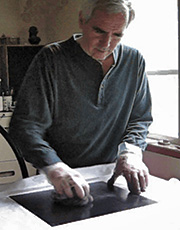
Visiting Nara: Returning to Nara and Yoshino
Plaisirs inattendus, l'art de la gravure; exposition des gravures de la Mongolie par Peter Miller à Saint-Cyr-sur-Loire, France; entretien avec Mireille Turquois, Secrétaire de l'Association Touraine-Mongolie, et vernissage, Manoir du Tour, Saint Cyr-sur-Loire (en français)
Comments on Peter Miller photogravures by Olga Zotova, Far East University of Vladivostok, and by Alex Gorodny, Director of Artetage Museum of Modern Art, Vladivostok-TV (in Russian)
'My Japanese Life', interview on NHK (日本語)
'Kamakura's Way', Part 1: An introduction to Kamakura's history, culture, and Buddhist lore through visits to its temples and ancient pathways (日本語)
'Kamakura's Way', Part 2: A visit to the temple of Zuisenji, guided by its head priest; and a dance enactment of the Yoritomo-Yoshitsune drama at Hachimangu (日本語)
'Kamakura's Way', Part 3: Etching and printing a photogravure copperplate in Peter Miller's workshop; Zen as part of everyday life, discussed by the Buddhist priest at Engakuji before a zazen session (日本語).
Contact ・ 連絡: Please type this address into your email. このアドレスをメールに入力してください:
Deeply etched and richly inked semi-abstractiions. ダイナミックで深くエッチングされたイメージで、あらゆる設定を盛り上げます。 Renewal, Openings, Network-3
Spring with. 春。 Veiled Desire, Climax Forest, Second Spring
A different view of Mt Fuji. 珍しい富士山の眺め。 Winged Fuji
The newest Network. 最新のネットワーク。 Network-7, textures ranging from brilliant to cave-like black.
Orient Blue: Breath of Life, Cross-currents, Running
A lighter touch: As If, Mind the Gap, For the Time Being;
Cycles of Life. 生命の循環 River of Light, Time and Time Again, Circuit
About tirage: Every full-screen page shows the current tirage, how many impressions I have printed so far. The current tirage may be less than the planned edition.
すべての全画面ページには、現在のティラージュ、つまりこれまでに印刷したインプレッション数が表示されます。限定版を一気に印刷するわけではないので、インプレッションの数は予定より少ないです。予定されている版数に関係なく、現在のティラージュが各版の実際の版数の制限になる可能性があります。たとえば、現在のティラージュが 8 (1 日に印刷できる一般的なインプレッション数) の場合、エディション全体で予定されているインプレッション数に関係なく、その作品の利用可能なインプレッション数のままになる可能性があります。
Preview how home or office rooms look with photogravure etchings. グラビアエッチングで家庭やオフィスの部屋がどのように見えるかをプレビュー。 Interiors , and Offices with photogravure etchings.
Etched copperplates linked to the prints made from them. それらから作られたプリントにリンクされたエッチングされた銅版。
The portfolio book Clairvoyant, published by Revue K; 14 beautifully printed images from an exhibition in Saint-Cyr-sur-Loire, France, with an Introduction by Jean-Yves Couteau and an essay by art philosopher Marie Parra-Aledo. Revue K発行のポートフォリオブックClairvoyant。フランスのサン シル シュル ロワールで開催された展覧会からの 14 枚の美しい印刷画像、ジャン イヴ クトーによる紹介と芸術哲学者マリー パラ アレドによるエッセイが含まれています。 Dappled Things pairs 23 photogravures by Peter Miller with 23 poems by Robin Chapman. Both books are designed by Roman Kames in Paris, and printed on 200-gram Tintoretto paper by Imprimerie Daniel in Prague. Each may be purchased separately, or both together for a discounted price. Dappled Things は、ピーター・ミラーによる 23 のグラビア写真と、ロビン・チャップマンによる 23 の詩を組み合わせたものです。どちらの本もパリのローマン・カメスによってデザインされ、プラハのインプリミエ・ダニエルによって 200 グラムのティントレット紙に印刷されています。それぞれを個別に購入することも、両方をまとめて割引価格で購入することもできます。
Purchasing: Order your own photogravure etching directly from each full-screen page. 購入: 各全画面ページから直接グラビア エッチングを注文できます。 Or use the Japanese order form.
With this form you can search the Kamakura Print Collection website or the whole Web:
-- SiteSearch Google --